Katja Lange · 20 October 2026
Stillwald's Vernal Pools Emerge as Key Breeding Sites for Migratory Amphibians Amid Changing Precipitation Cycles
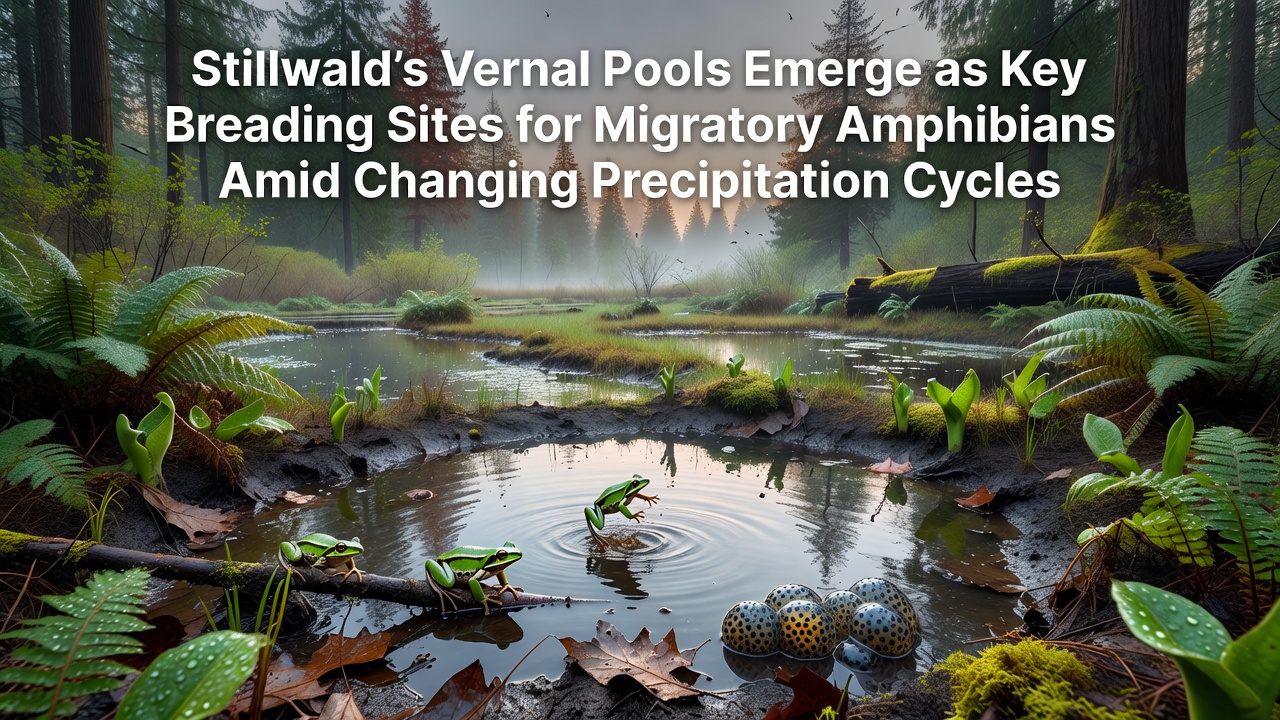
Stillwald forest has long supported networks of vernal pools that fill with water from seasonal rains and snowmelt, creating temporary wetlands essential for amphibian reproduction. These pools dry out later in the year, which prevents fish from establishing and reduces predation on eggs and larvae. Recent monitoring shows that shifts in precipitation timing and volume have altered when and how these pools form, yet many continue to serve as primary breeding locations for species that migrate to them each season.
Characteristics of Vernal Pools in Stillwald
Observers note that Stillwald's vernal pools vary in size from small depressions holding water for a few weeks to larger basins that retain moisture through much of the spring. The forest's underlying soil and topography direct runoff into these depressions, while dense canopy cover moderates temperature and evaporation rates. Data collected over multiple years indicate that pools located near stream corridors often receive supplemental moisture during periods of heavier rainfall, extending their hydroperiod compared with more isolated sites.
Amphibian Species and Migration Patterns
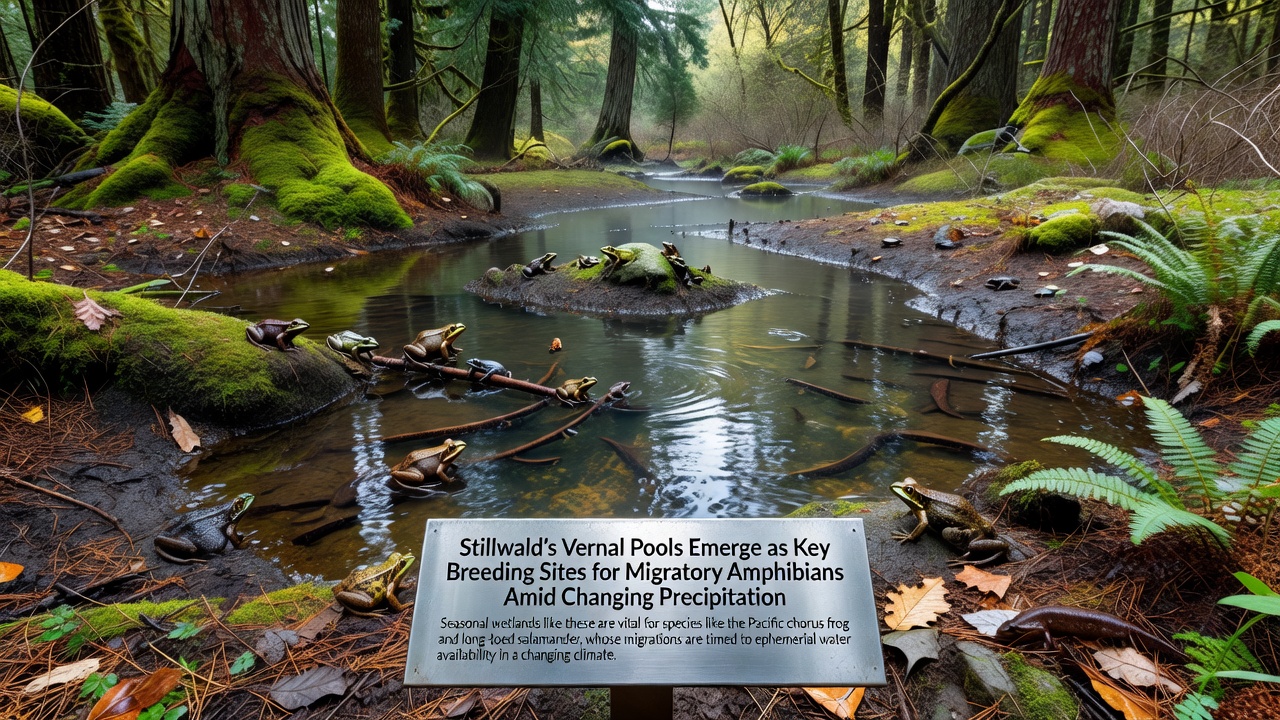
Several migratory amphibians rely on these pools for breeding, including various frog and salamander populations that travel from upland forests to the wetlands. Adults arrive in early spring, deposit eggs in the shallow water, and larvae develop rapidly before pools recede. Tracking studies reveal that individuals return to the same pools across years when conditions allow, suggesting site fidelity plays a role in population persistence. In October 2026, field teams recorded early fall rains that partially refilled several pools ahead of the typical cycle, prompting limited late-season activity among some species that normally overwinter in terrestrial habitats.
Effects of Altered Precipitation Cycles
Changing precipitation patterns have produced both longer dry intervals and more intense rain events in the region. Records from local weather stations show increased variability in spring rainfall totals since the early 2000s, with some years bringing rapid pool formation followed by quick drying. Researchers have documented cases where shortened hydroperiods led to incomplete larval development, while extended wet periods in other seasons allowed additional breeding opportunities for certain species. These fluctuations create a patchwork of conditions across Stillwald, where some pools support successful recruitment one year and few survivors the next.
Monitoring Efforts and Data Collection
Long-term surveys conducted by forest ecologists track water levels, species presence, and breeding success at dozens of pools each season. Acoustic sensors and visual counts provide complementary information on calling activity and egg mass numbers. Findings from these programs show that pools with greater surrounding forest cover tend to maintain more stable conditions despite variable rainfall, because leaf litter and root systems reduce evaporation and channel water more effectively. In recent seasons, observers have noted that certain pools previously considered marginal now support higher numbers of breeding adults during wetter springs.
Interactions with Forest Management
Forest management practices influence pool hydrology through canopy thinning or road construction that alters drainage. Targeted restoration work along old timber routes has included planting native vegetation to stabilize soils and direct runoff toward existing depressions. These efforts align with broader strategies to maintain habitat connectivity for migrating amphibians. According to reports from the European Environment Agency, similar approaches in other European forests have helped buffer amphibian populations against precipitation extremes by preserving microhabitats that retain moisture longer.
Broader Ecological Context
Vernal pools contribute to forest biodiversity by supporting not only amphibians but also invertebrates and plants adapted to temporary water. The drying phase allows nutrient cycling that benefits terrestrial species when the basin becomes dry land again. Data from comparable sites across central Europe indicate that networks of pools, rather than single large wetlands, increase overall resilience for migratory species facing variable climate conditions. Stillwald's configuration of many small to medium pools distributed throughout the forest fits this pattern, providing multiple options when some locations experience unsuitable timing.
Conclusion
Stillwald's vernal pools continue to function as important breeding sites for migratory amphibians even as precipitation cycles shift. Ongoing data collection helps identify which pools remain most reliable under changing conditions, while management actions focus on maintaining the surrounding forest structure that supports pool hydrology. These combined efforts provide measurable information on how temporary wetlands respond to environmental variability and what factors influence amphibian use across seasons.