Ulrich Washington · 22 September 2026
Researchers Deploy Acoustic Sensors to Monitor Bat Populations Roosting in Stillwald's Mature Stands
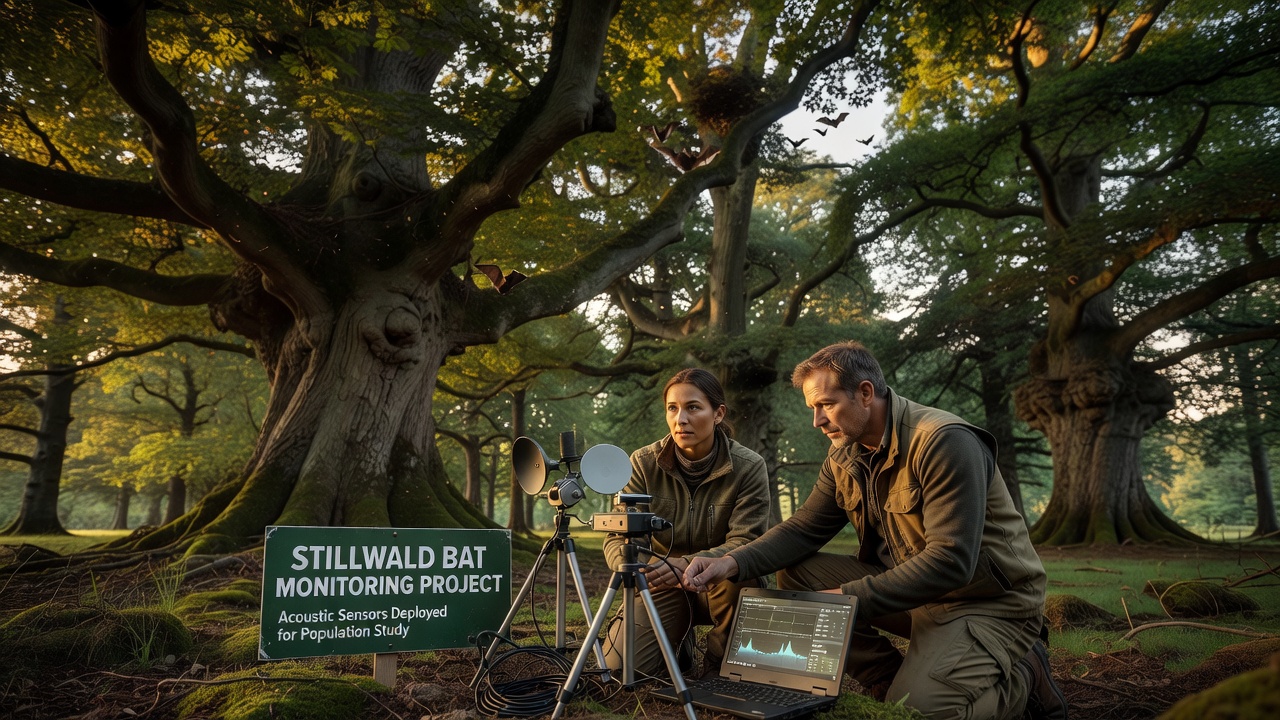
Researchers have started placing acoustic sensors throughout Stillwald's older tree stands to track bat activity and roosting patterns, and teh effort gained momentum in September 2026 when field teams completed the first full round of device installations across multiple sites. These mature stands provide the high cavities and dense foliage that several bat species prefer for daytime roosts, yet traditional visual surveys often miss the nocturnal movements and seasonal shifts that define population health. Acoustic monitoring captures ultrasonic calls that bats emit while foraging and navigating, which allows teams to identify species presence without disturbing the animals directly.
Project Background and Site Selection
Stillwald's mature stands feature beech and oak trees that have reached ages exceeding 150 years, creating structural complexity that supports diverse wildlife including multiple bat genera. Teams selected locations based on prior radio-tracking data and canopy height maps, which revealed clusters of potential roost trees along north-facing slopes where humidity remains higher during summer months. The sensors, small weatherproof units equipped with microphones sensitive to frequencies between 10 and 200 kHz, record continuously for up to 14 nights before data retrieval, and crews mount them at heights between 3 and 12 meters to align with typical emergence paths.
How Acoustic Monitoring Works in Practice
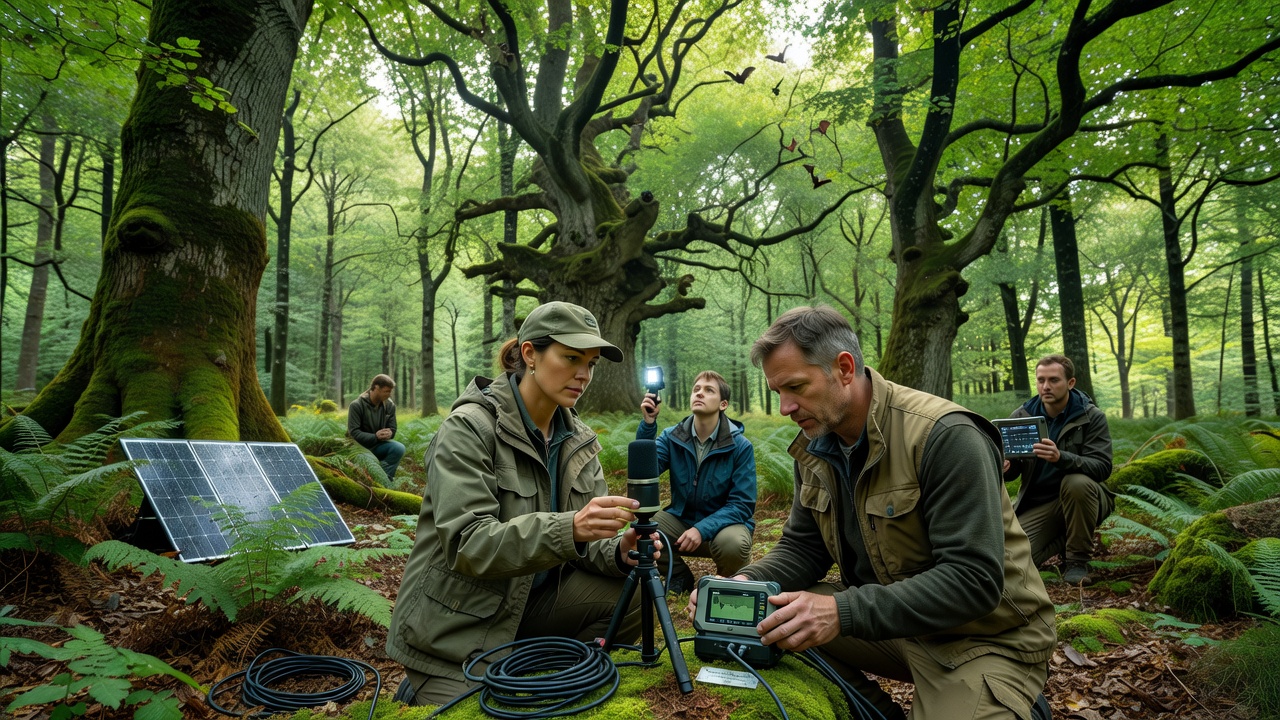
Each device stores raw audio files on removable cards that researchers later process through automated software capable of filtering noise from wind and insects before matching call signatures against reference libraries. This approach yields nightly activity indices that show peaks shortly after sunset and again before dawn, patterns that align with insect availability in the surrounding clearings. When researchers compare recordings from different stands, they note variations in species composition, with Myotis species dominating deeper interior sites while Pipistrellus calls appear more frequently near forest edges.
Data Collection Timeline Beginning September 2026
Deployment started on the first clear night in September 2026, and within two weeks the network covered 18 sensor locations distributed across three separate mature stands. Field crews returned every 10 days to swap memory cards and check battery levels, which allowed continuous coverage through the autumn migration period when some species move to winter hibernacula. Early analysis of the first batch of recordings already shows consistent presence of at least five bat species, with activity levels remaining stable across consecutive weeks despite changing temperatures.
Species Identification and Roost Confirmation
Call libraries developed from European reference collections enable rapid classification of the recorded sequences, and researchers cross-check uncertain detections through ground-truthing with infrared cameras placed near suspected roost entrances. One stand yielded repeated calls matching the greater mouse-eared bat, a species whose local distribution remains patchily documented, while another site produced distinctive social calls associated with maternity colonies. These findings help refine maps of critical habitat that land managers can use when planning selective thinning or trail maintenance.
Integration with Broader Conservation Frameworks
Monitoring results feed into regional databases maintained by forestry authorities, and the acoustic datasets complement existing mist-netting efforts conducted at the forest periphery. Observers note that combining passive recording with occasional physical captures provides a more complete picture of population trends than either method alone. Data from similar projects conducted in comparable beech-dominated forests elsewhere in central Europe indicate that acoustic indices can detect changes in activity within a single season when sample sizes exceed several hundred recording nights.
Researchers also coordinate with nearby agricultural stations to correlate bat activity with insect abundance measured through light traps, which reveals whether foraging hotspots shift in response to pesticide applications or crop rotations in adjacent fields. This multi-factor approach strengthens the case for maintaining buffer zones around mature stands.
Technical Challenges and Adjustments
Early in the September 2026 deployment, several units recorded excessive rain noise that masked weaker calls, prompting technicians to adjust microphone angles and add wind shields. Battery life proved shorter than expected under cool autumn nights, so crews switched to higher-capacity cells mid-season. Data processing requires substantial computing time because raw files exceed 20 gigabytes per sensor per week, yet open-source analysis pipelines now allow teams to generate nightly species lists within hours of card retrieval.
Future Expansion and Long-Term Monitoring Goals
Project leads plan to add another dozen sensors in spring 2027 targeting younger stands for comparison, which will test whether activity levels differ significantly between age classes. Long-term records spanning multiple years will help distinguish natural fluctuations from responses to climate-driven changes in insect phenology or forest structure. Partnerships with universities provide access to machine-learning tools that improve species discrimination, particularly for calls that overlap in frequency range.
Conclusion
The acoustic sensor network now operating in Stillwald's mature stands supplies continuous, non-invasive data on bat populations that visual methods alone cannot match, and the September 2026 deployment marks the start of what researchers expect to become a multi-year baseline. Findings from these recordings support habitat protection decisions and contribute to wider European efforts tracking bat status across forested landscapes. Continued refinement of placement protocols and analysis methods should increase detection accuracy while keeping disturbance to roosting animals at minimal levels.