Ellis Schmidt · 3 November 2026
Bedrock Variations Shape Stillwald's Rare Orchid Colonies Along Hidden Ridgelines
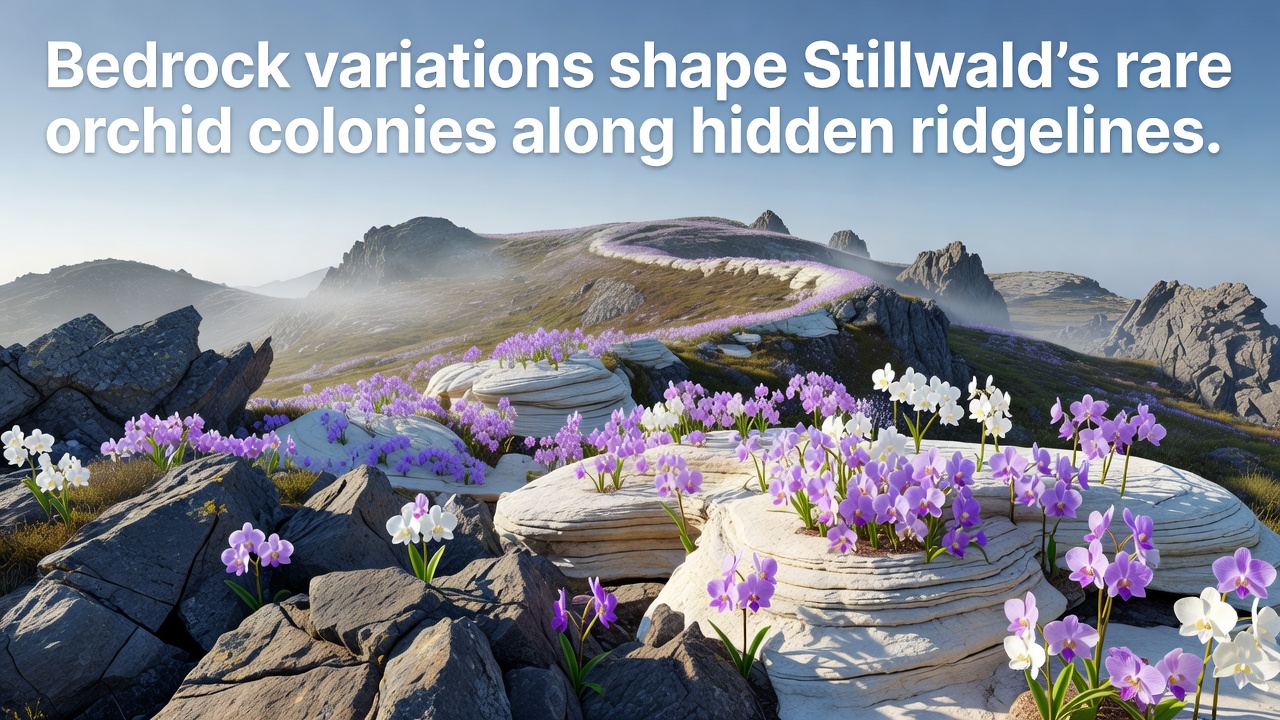
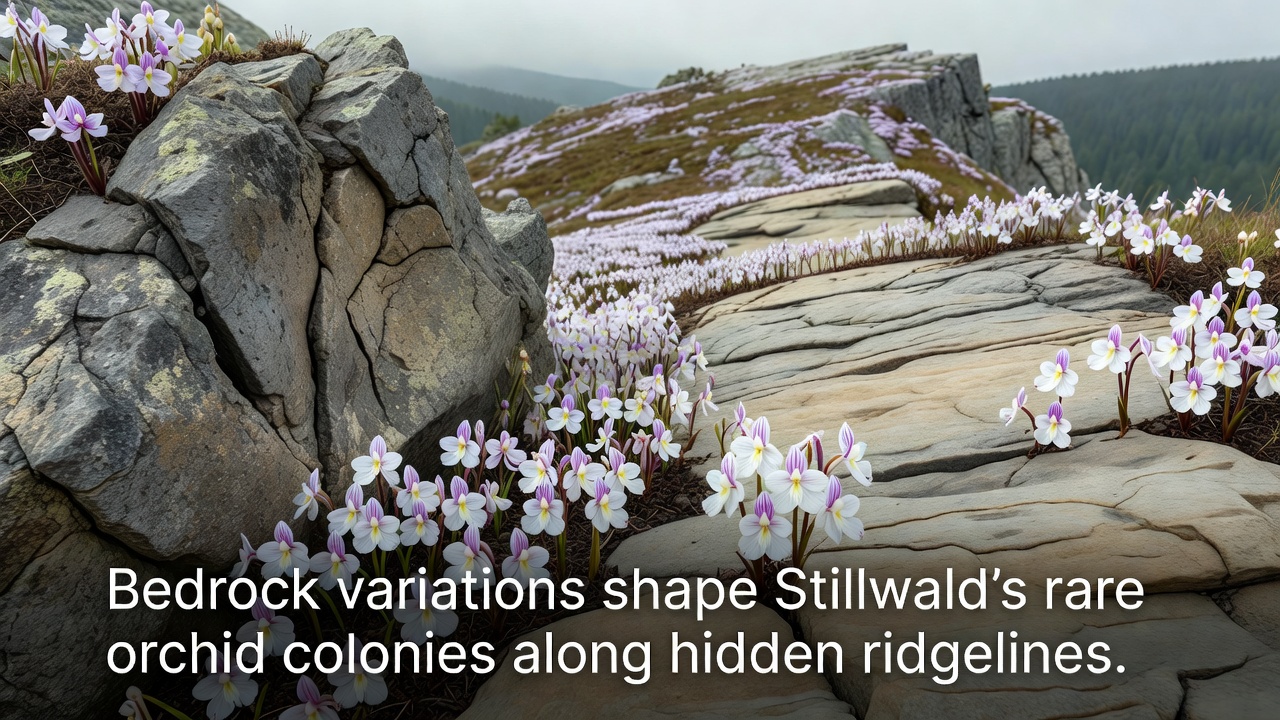
Stillwald's ridgelines reveal distinct bedrock layers that create specialized habitats for rare orchid colonies, and researchers have documented these patterns through systematic soil and vegetation surveys conducted over multiple seasons. Different rock types weather at varying rates and release specific minerals that alter soil pH and nutrient availability, which in turn determine which orchid species can establish mycorrhizal associations and persist in these elevated locations.
Geological Foundations of the Ridgelines
Stillwald sits atop a complex mosaic of sedimentary, metamorphic, and igneous formations where limestone outcrops sit adjacent to granite intrusions and patches of basalt, and these transitions occur within short distances along the ridgelines. Limestone weathers to produce calcium-rich, alkaline soils while granite breaks down into more acidic substrates with lower base cation levels, and basalt contributes higher levels of magnesium and iron. Such contrasts create narrow bands of suitable habitat that orchid populations follow rather than spreading uniformly across the landscape.
Data from geological mapping projects indicate that these bedrock contacts often coincide with changes in slope angle and drainage patterns, which further modify moisture retention and organic matter accumulation. Observers note that orchid colonies cluster most densely where limestone meets granite because the resulting soil gradients support a wider range of fungal partners required by different orchid species.
Orchid Species and Their Bedrock Preferences
Multiple orchid taxa appear along these ridgelines, including Cephalanthera species that favor calcium-rich soils derived from limestone and Epipactis variants that tolerate the more acidic conditions found over granite. Researchers have recorded Cypripedium populations primarily on basalt-derived substrates where iron and magnesium levels remain elevated, and these distributions align closely with bedrock boundaries rather than with elevation or aspect alone.
Studies conducted by teams from the European Environment Agency have shown that soil pH measurements taken directly beneath orchid plants differ significantly across bedrock types, with values ranging from 7.2 on limestone to 5.1 on granite within the same ridgeline transect. These chemical differences influence seed germination success and the availability of compatible mycorrhizal fungi, factors that ultimately control colony expansion or contraction over time.
November 2026 Monitoring Efforts
In November 2026 field crews completed the latest round of targeted sampling along three previously under-surveyed ridgelines where bedrock transitions had been mapped but orchid presence remained unconfirmed. Portable pH meters and handheld X-ray fluorescence devices allowed rapid assessment of soil chemistry at each orchid location, and preliminary results indicate that colonies continue to track the same bedrock contacts identified in earlier surveys. Temperature and precipitation data collected during the same period show that autumn conditions did not alter the established patterns, suggesting bedrock influence overrides short-term climatic variation in these microhabitats.
Implications for Conservation Mapping
Conservation planners now incorporate bedrock geology layers into habitat suitability models for Stillwald orchids because traditional vegetation maps alone fail to predict colony locations accurately. When soil chemistry data from granite and limestone zones are combined with existing topographic information, model accuracy improves noticeably according to internal reports from the German Federal Agency for Nature Conservation. This integrated approach helps prioritize protection of specific ridgeline segments where bedrock diversity supports multiple orchid species within a compact area.
Long-term monitoring plots established on both sides of major bedrock contacts continue to record annual changes in flowering stem counts and seedling recruitment, and these records demonstrate that colonies on limestone substrates maintain higher densities even during drier years. Researchers attribute the difference to greater water-holding capacity in the finer-textured soils that develop over limestone compared with the coarser, more freely draining granite-derived materials.
Conclusion
Bedrock variations across Stillwald's hidden ridgelines create a patchwork of soil conditions that directly shape the distribution and composition of rare orchid colonies. Systematic surveys and soil analyses confirm that limestone, granite, and basalt each support distinct orchid assemblages through their influence on pH, nutrient supply, and mycorrhizal availability. Continued monitoring through 2026 and beyond will provide further data on how these geological controls interact wth changing precipitation patterns, yet the fundamental role of bedrock remains clear in every transect examined to date.